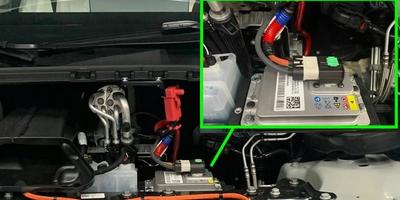
Tesla sells two things people call "the warranty," and they expire at very different times. The Basic Vehicle Limited Warranty runs four years or 50,000 miles. The high voltage battery and drive unit are covered separately, for much longer. Since late 2025 there is also a way to extend that battery coverage past its limit for the first time, which changes the math for anyone planning to keep a Model 3 or Model Y past year eight.
Battery and Drive Unit Limited Warranty
| Vehicle | Coverage |
|---|---|
| Model S Model X Cybertruck | 8 years or 150,000 miles, whichever comes first, with minimum 70% retention of Battery capacity over the warranty period. |
| Model 3 RWD Model Y RWD Model Y AWD | 8 years or 100,000 miles, whichever comes first, with minimum 70% retention of Battery capacity over the warranty period. |
| Model 3 Premium RWD Model 3 Premium AWD Model 3 Performance AWD Model Y Premium RWD Model Y Premium AWD Model Y Performance AWD Model Y L Premium Launch Series | 8 years or 120,000 miles, whichever comes first, with minimum 70% retention of Battery capacity over the warranty period. |
Source: Tesla's Vehicle Warranty support page, current as of September 2026. Tesla has renamed trims several times. Cars badged Standard Range, Long Range, or Performance fall into the same mileage tiers: base rear-wheel-drive gets 100,000 miles, Long Range and Performance get 120,000.
The clock starts on the original in-service date, not the date of purchase. A used 2020 Model 3 bought today has roughly two years of battery coverage left regardless of how few miles it has shown. The mileage cap is the odometer reading, not miles driven since purchase.
Early Model S and Model X vehicles were sold under different terms, including eight years with unlimited miles and no capacity guarantee. The warranty document delivered with the vehicle governs, not the current website.
What the 70 percent rule actually means
Tesla does not promise the pack will hold its original capacity. It promises the pack will retain at least 70 percent of original capacity through the warranty period. A pack sitting at 78 percent in year seven is behaving as designed and no claim applies. A pack that drops below 70 percent inside the term is a warranty matter.
Displayed range is not the same as measured capacity. A vehicle showing reduced rated miles may have a calibration drift rather than genuine degradation. A Battery Health Test recalibrates the estimate through a controlled discharge and charge cycle and can take up to 24 hours, which makes it the more reliable number when a capacity claim is on the table.
Field Note: Ray Novelo
Falling under 70 percent is rare. Most packs lose somewhere in the range of 8 to 15 percent over the first 100,000 miles and never come close to the threshold. The battery and drive unit failures that actually show up are sudden ones: BMS faults, coolant intrusion into the pack, contactor failures, and drive units that develop noise or start throwing torque limits. Those are covered outright, with no capacity math involved.
What the battery warranty does not cover
The warranty document is more detailed than the summary page, but denials generally land in one of these categories:
- Collision, flood, or fire damage, and any damage from opening the pack.
- Damage caused by third-party adaptors or chargers, which Tesla calls out specifically.
- Damage from continuing to drive the vehicle after a warning message or known fault.
- Modification of the battery, drive unit, or vehicle software.
- Normal wear, including any capacity loss that remains above 70 percent.
Using an independent shop does not by itself void coverage. Federal anti-tying rules generally prevent a manufacturer from requiring branded paid service to keep a warranty in force, though Tesla may still deny a claim for damage caused by an improper repair. Tesla Warranty Coverage: What Owners Should Check First covers the claim and denial process in more detail.
The High Voltage Battery and Drive Unit Extended Service Agreement
In December 2025, Tesla began selling coverage that extends past the battery warranty limit. It is called the High Voltage Battery and Drive Unit Extended Service Agreement, usually shortened to Battery ESA. The terms are narrow and worth reading closely before assuming it is a general extended warranty.
- Covers repair or replacement of the high voltage battery and drive unit manufactured or supplied by Tesla, needed to correct a failure during the coverage period. Parts external to those two components are excluded.
- Runs up to 24 months or 30,000 miles, whichever comes first, beginning the day the original Battery and Drive Unit Limited Warranty expires.
- Priced at $2,000 as a one-time purchase, with a $500 deductible per service visit where a covered repair is performed.
- Available for Model 3 and Model Y only. Model S, Model X, and Cybertruck are not eligible.
- The vehicle must be new or Tesla Certified Pre-Owned, still under the original battery warranty, not leased, and free of a branded title or total loss record.
- Purchased through the Tesla app only. It cannot be financed into the vehicle price and there is no monthly option.
- Unused coverage transfers to the next owner once Tesla processes the ownership change.
- Refundable in full if coverage has not started. After it begins, the agreement terms govern refunds.
⚠ There is no grace period
The Battery ESA can only be purchased while the original Battery and Drive Unit Limited Warranty is still active. Once the vehicle passes eight years or its mileage cap, it is permanently ineligible. Owners approaching either limit should decide before it passes, not after.
Is it worth $2,000?
It depends almost entirely on mileage pace. The ESA buys 24 months or 30,000 miles, so the value sits in whether real driving fills that window.
It tends to make sense for higher-mileage drivers who will reach the mileage cap around year six or seven, owners planning to keep the vehicle well past eight years, and anyone selling in the eight to ten year window who wants transferable coverage as a negotiating point.
It makes less sense for low-mileage owners. A vehicle reaching eight years with 60,000 miles on it is buying coverage for a period where a pack failure is statistically unlikely. The other consideration is that many failures described as battery failures turn out to be a single bad module, a coolant fitting, a contactor, or a BMS harness. Repairs at that level, out of warranty, are frequently well under the cost of the agreement plus its deductible.
One practical note: the $500 deductible applies per service visit regardless of repair size, and covered work is performed by Tesla. An independent diagnosis beforehand can establish whether the fault is genuinely battery or drive unit related, since a fair number of battery warnings trace back to low voltage or coolant issues instead.
How to check your own coverage
- ✓Open the Tesla app, go to Service, then Warranty. It lists Basic and Battery warranty end dates and mileage limits.
- ✓If the app does not show it, the in-service date appears on the original delivery paperwork or the Monroney label.
- ✓For a used purchase with no paperwork, a VIN lookup through Tesla will confirm the in-service date.
- ✓If the Battery ESA is being considered, check eligibility in the Tesla app before the original warranty expires.
If the vehicle is still under the Battery and Drive Unit warranty and a battery or drive unit fault appears, the claim belongs at Tesla. There is no reason to pay any shop for work Tesla is obligated to cover.
Not sure where your coverage stands?
Remote diagnostics across Southern California can confirm whether a fault is battery, drive unit, or something outside the high voltage system before you book a service visit.
This article provides general consumer information, not legal advice. Tesla updates warranty terms without notice, and the warranty document issued with a specific vehicle is authoritative for that vehicle.
References & Further Reading
External resources related to this post. We link directly — no paywalls, no affiliate links.
Tesla official