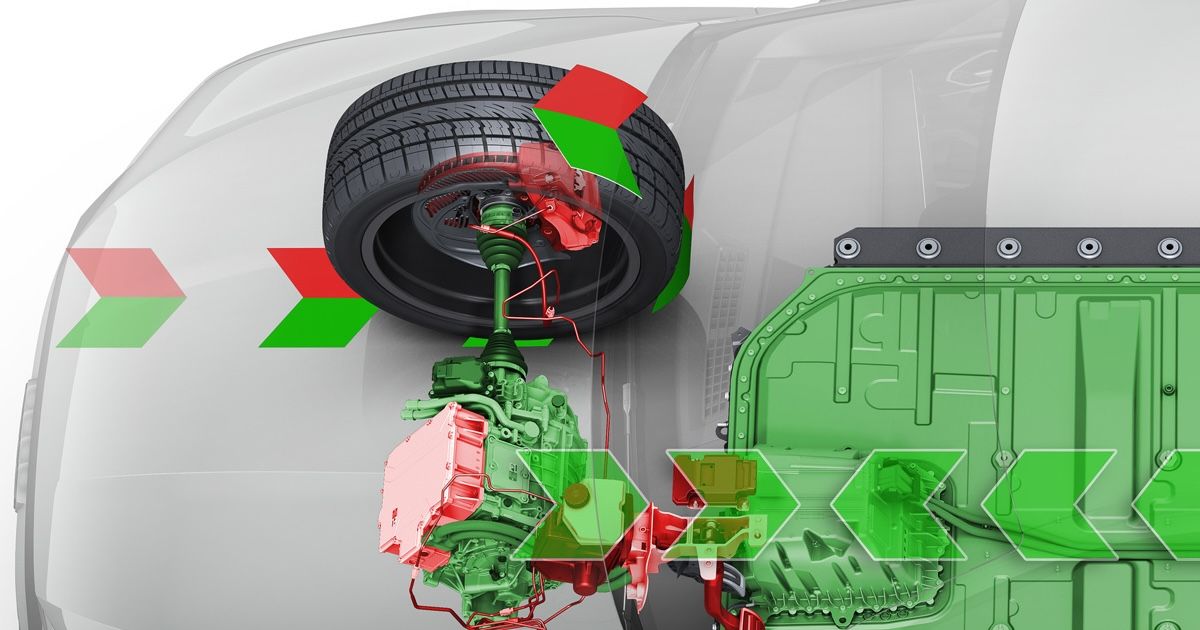
When you ease off the accelerator in a Tesla, the drive motor can act as a generator. The car slows and sends some of its kinetic energy back to the high-voltage battery. That process is regenerative braking, usually shortened to regen.
Regen reduces how often the friction brakes must do all the work. It does not replace the brake pedal, and the driver remains responsible for stopping the car.
Why the Amount of Regen Changes
Tesla states that regenerative braking may be limited when the battery is cold or already fully charged. Tire changes and other conditions can also affect the amount of regen temporarily while the vehicle recalibrates.
Watch the power meter. Energy returned to the battery appears in green on current Model 3 displays, while energy used by the regular brakes appears in gray.
Some vehicles offer Apply Brakes When Regenerative Braking Is Limited under Controls > Dynamics. When enabled, the car can apply the regular brakes to provide more consistent deceleration as regen changes. The setting may vary by model, configuration, and software. Tesla warns that it may not operate if the brakes are extremely hot.
Learning One-Pedal Driving
Practice in a quiet, familiar area. Instead of lifting off the accelerator abruptly, ease back and judge how early the car begins to slow. Leave enough space for conditions and use the brake pedal whenever you need more deceleration.
Do not assume the car will slow the same way every morning. A cold or full battery can change the response, especially if automatic brake blending is unavailable or turned off.
What Regen Can and Cannot Tell You
Temporary limits with a cold or full battery can be normal. A persistent change accompanied by an alert, reduced power, charging trouble, noise, or vibration deserves attention.
The original article quoted a universal 60 to 70 kW recovery rate, a 10 to 15 percent city-range gain, and a 100,000-mile brake-pad life. Those figures vary with vehicle, speed, battery condition, route, and driving style, so they have been removed.
Friction Brakes Still Need Inspection
Long brake-pad life does not mean the braking system is maintenance-free. Pads, rotors, calipers, fluid, hoses, and hardware still need inspection. Follow the maintenance guidance for the vehicle and local conditions. Tesla specifically recommends cleaning and lubricating brake calipers every 12 months or 12,500 miles in areas where roads are salted during winter.
In Southern California, inspect based on condition and the vehicle's service guidance rather than performing an unsupported weekly hard-braking routine. If braking feel changes, the car pulls, or you hear grinding, have the system inspected.
References & Further Reading
External resources related to this post. We link directly — no paywalls, no affiliate links.